

Getting selected for an interview is very exciting, but sometimes the hiring process gets impacted because your references do not answer calls or emails. When a professional reference doesn’t respond, the best solution is to send a polite reminder. While doing follow-up, make sure that you sound polite and keep a backup reference and parallelly update your employer. Actively and proactively following up can avoid delays in getting the Job offer letter.
Checking references given in the interview is also part of the hiring process in many companies. In general, most references respond when contacted by hiring companies. However, it can be stressful if a shared reference goes silent or does not answer when contacted. The good news is that the situation is common and can be handled professionally very easily.
Why Aren’t Your References Responding?
There can be multiple reasons why a reference may not respond, and most of them are unintentional.
- Missed communication: There can be multiple reasons for missing an email, and one of the major reasons is the landing of the reference check email in the spam folder.
- Busy schedules: They may be busy with their personal or official work or meetings.
- Unclear expectations: Your reference may not know that they can get a call from your employer. Hence, informing them in advance is always a good idea.
- Outdated contact details: There can be a change in mobile number or email ID.
Having an understanding of the real cause can help you handle this situation more accurately.
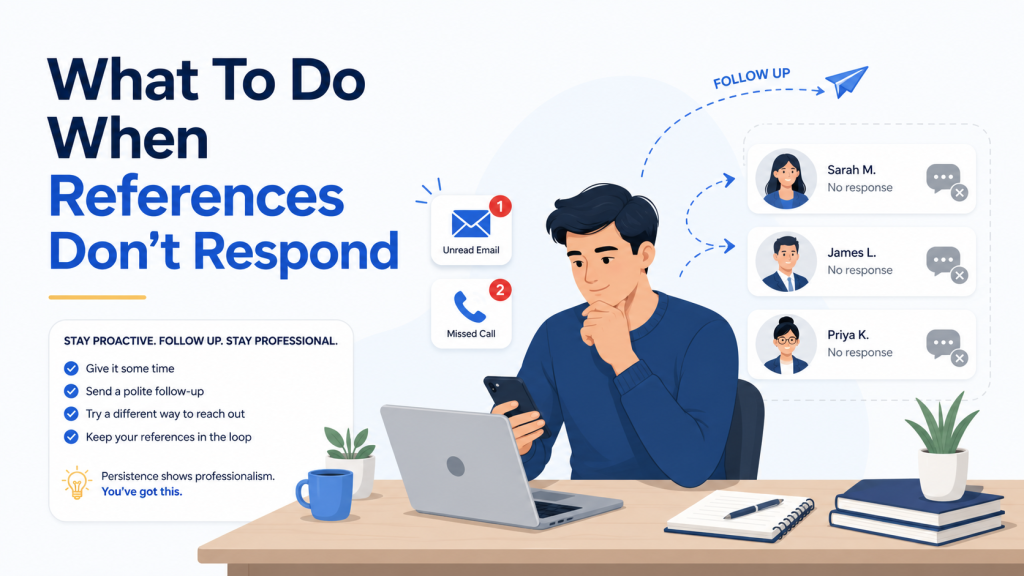
Step 1: Follow Up Directly With Your Reference
The first thing you need to do is not to assume anything. Before assuming something worst its good idea to reach out to your given reference directly in a polite way. A gentle, friendly message will work.
- Directly send an email or text on WhatsApp. Make sure that you update them about mentioning them as a reference to avoid delays in selection.
- While texting them about the reference, try to tell them about the employer or recruiter. Mentioning the employer or recruiter can make it easier for others to identify the employer or recruiter.
- Be humble and polite, since they are doing a favor.
Example message:
“Hi ABC, hope you are doing great as always. I just wanted to inform you that (Company Name) may be reaching out to you for a reference check. Requesting you to please respond to them whenever you have time, and thank you so much for your support”
Step 2: Notify the Employer Promptly
If the given reference is not answering and goes silent, inform the employer or recruiter rather than sitting quietly. This act will demonstrate professionalism and will keep your hiring process moving.
- Let them know that you have already informed your reference and you are following up proactively.
- Don’t be desperate and don’t overexplain; make it a simple and basic informative update.
- Always be ready with a second backup and ask whether additional time is available in parallel.
Most employers or hiring managers appreciate honesty and transparent communication. In most cases, they value the candidate who keeps them updated throughout the hiring process.
Step 3: Identify a Backup Reference
Depending only on one reference is not a good idea. Always make sure that you have a backup reference ready. It’s a smart decision to have a backup. You can use your secondary reference in case of getting no response from the primary reference.
You can consider the following strong backup reference options if needed :
- A former manager or supervisor.
- A former team lead or former project manager.
- A senior colleague whom you have worked closely with.
- An internship supervisor
- A professor or academic advisor
Informing your secondary reference is always a good idea before submitting their name for reference. While informing them, you can also ask about their availability & willingness.
Step 4: Provide Context to the Employer if Needed
If your reference is not picking up the call or not replying to the mail due to genuine reasons, such as traveling or being on leave, inform your employer or hiring manager. This will protect your credibility for sure.
- Keep things simple and professional – For example, my original reference has been difficult to reach, I would like to share an alternative reference ( Name of your secondary reference), who can communicate about my employment and performance at ABC Company ( Company Name).
- Avoid criticizing or portraying your primary reference negatively.
- Try to present the change as a proactive solution, not a last-minute fix.
Most of the time, the hiring manager knows that there can be unexpected situations during the hiring process. If your primary reference goes silent and doesn’t reply, it can slow down the hiring process, but it will not stop it completely. Keeping your employer updated shows that you are a responsible candidate.
Step 5: Prevent the Problem Next Time
To avoid such a situation where you need to search for”What To Do When References Don’t Respond”, follow the practices below before applying for jobs:
- Always take permission from the person before mentioning him/her as your reference.
- Make sure that you explain to them the job for which you have applied. This will help them to remember the things as per the job description.
- If possible, try to share the recruiter’s name or email ID with your reference beforehand so they can identify the outreach and respond without any delay.
- Always make a list of at least 3 connections that can be used as references.
- Never forget to thank them after a successful background check.
Frequently Asked Questions
Q: How long should I wait before following up with an unresponsive reference?
If your reference has not responded in 3 working days, then you need to follow up actively. Since the hiring is getting impacted, connecting within 24 hours is reasonable.
Q: Should I tell the employer my reference isn’t responding?
Yes, make sure that you update your hiring manager regarding any delay. This will show how serious you are about the opportunity. Make sure that you avoid writing any negative things about your primary reference. Write a simple and professional email to your hiring manager. This will also help you to get an extension for the background check.
Q: Can I use a reference who has retired or changed jobs?
Yes, you can share a former manager or supervisor’s contact details as a reference. The recruiter is only going to ask about your professional journey and work. Their current employment status is usually less important than their familiarity with your work and skills.
Q: What if I don’t have any other references available?
As a working professional, you can consider any professional network, such as a mentor, Team lead, or colleagues. If you are at the starting stage of your career, then you can consider a professor or any academic advisor.
Q: Can an unresponsive reference affect my job offer?
In most of the cases, a single unresponsive reference will not cause you to lose an offered job. Even employers understand that not everyone can be available every time. However, it can still impact the hiring process. Getting no response from references can make the hiring process slow. Always maintain transparency and show them that you are doing multiple follow-ups.

